Can You Put Prescription Lenses in Your Favourite Sunglass Frame?
Love the shape of your sunglasses but need vision correction? In many cases, an optical lab can replace the original tinted lenses with custom prescription sunglass lenses. The deciding factors are not the brand name or the price of the frame. They are the frame’s condition, curvature, mounting system, dimensions and whether a lens design…
By Viszy · · 4 min read
In this article
Love the shape of your sunglasses but need vision correction? In many cases, an optical lab can replace the original tinted lenses with custom prescription sunglass lenses. The deciding factors are not the brand name or the price of the frame. They are the frame’s condition, curvature, mounting system, dimensions and whether a lens design suitable for your prescription can be fitted safely. A quick frame inspection can save you from ordering lenses that will not work well.
First, check whether the frame is suitable
A sturdy full-rim frame with intact hinges and a conventional lens groove is often easier to reglaze than a fragile, heavily curved or highly specialised design. Look closely for cracks near the bridge, whitening or brittleness in plastic, loose screws and previous repairs. Vintage frames may look beautiful but become less flexible over time. Some sport and fashion sunglasses use proprietary shields or unusual mounting systems that ordinary prescription lens labs cannot reproduce. An optician should inspect the actual frame before confirming compatibility.
Why wraparound sunglasses are more complicated
Highly curved frames bring the lenses around the sides of the face, which can improve coverage from peripheral light. That shape also changes the optical geometry. Standard prescription lenses may not sit correctly or provide comfortable vision in a strongly wrapped frame, particularly with higher powers or astigmatism. Some manufacturers offer prescription-compatible wrap designs with compensation for frame angle; others use inserts behind a non-prescription shield. Do not assume an optician can simply edge a normal clear lens to any curved sunglass shape.
Choose the sun lens before choosing the colour
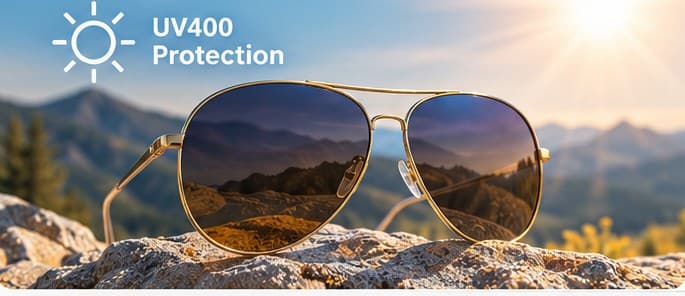
The most important sun-safety feature is verified blocking of essentially all UVA and UVB radiation. A very dark tint is not proof of UV protection. Grey lenses usually retain a fairly neutral view of colours; brown can give a warmer look, while green is another versatile choice. The amount of visible light transmitted affects comfort in bright conditions. Ask for a tint appropriate to how and where you plan to use the pair, and avoid dark lenses for night-time driving. Your optician should confirm the selected lens meets the relevant UV protection specification.
Is polarization worth adding?
Polarized lenses reduce reflected glare from horizontal surfaces such as roads and water. That can be especially pleasant during daytime driving, boating or travel. Polarization and UV blocking are separate properties, so ask for both if you want both. Be aware that some dashboard displays, mobile screens and instrument panels become difficult to see through polarized lenses at certain angles. Test this limitation if your daily activities rely on digital displays. Neither polarization nor a mirror finish guarantees better UV protection by itself.
Prescription strength and lens thickness matter
Higher powers can make lenses thicker or heavier, depending on the frame’s size, shape and lens material. A very large aviator lens opening may magnify edge thickness for minus prescriptions, while stronger plus lenses can be thicker in the centre. Material choice should also reflect how the sunglasses will be used. For sports or activities with impact risk, ask specifically for suitable impact-resistant protective eyewear, not merely fashionable prescription sunglasses. A lens being prescription-made does not automatically make it sports safety equipment.
What to ask before paying
Ask the provider to confirm the frame’s suitability, the exact lens type, UV protection, optional polarization, available tint, thickness expectations and whether the original lenses can be returned. Clarify any risk to an older frame during lens removal and fitting. Check how the lenses will be centred using your current prescription and measurements. If the frame is expensive or sentimental, ask what happens if it cracks during reglazing. A written quote and realistic explanation of limitations are more useful than a generic promise that every frame is compatible.
Frequently asked questions
Can I keep my original sunglass lenses?
Usually you can ask for them back, though removal depends on the frame design.
Can mirrored sunglasses take prescription lenses?
Some can, using an appropriate mirror coating on new prescription lenses.
Will the tint affect prescription accuracy?
A correctly manufactured tinted lens can provide the prescribed correction; frame geometry and fitting still matter.
Are darker lenses safer?
No. Verify UV protection independently of tint darkness.
The bottom line
Prescription reglazing can give a favourite sunglass frame a useful second life. The best results come from checking the frame first, choosing UV protection deliberately and matching the prescription lens design to the frame’s shape. If a dramatic wrap or shield cannot accept your power reliably, choose a prescription-ready alternative rather than compromising vision.
Need new lenses for your frame?
Free doorstep pickup & drop in 200+ cities. Lenses from ₹800.
Viszy
Viszy's team of lens specialists. We fit and power-check every pair we send out, and write these guides to help you choose with confidence.
Last updated 10 Nov 2026