Glasses frame materials: acetate vs TR90 vs metal vs titanium
Acetate, TR90, plastic, stainless steel or titanium? A simple guide to glasses frame materials, their weight, strength, comfort and price, so you buy the right pair.
By Viszy · · 2 min read
In this article
Two frames can look almost the same online and feel completely different on your face. The difference is usually the material. Here’s a simple guide to the most common spectacle frame materials, and who each one suits.
Quick comparison
| Material | Weight | Strength | Best for |
|---|---|---|---|
| Acetate | Medium | Good | Rich colours, bold styles |
| TR90 | Very light | Flexible, hard to break | All-day wear, active people, kids |
| Injected plastic | Light | Fair | Budget and backup pairs |
| Stainless steel | Light | Good | Slim, minimal frames |
| Titanium | Very light | Excellent | Sensitive skin, premium everyday wear |
Acetate
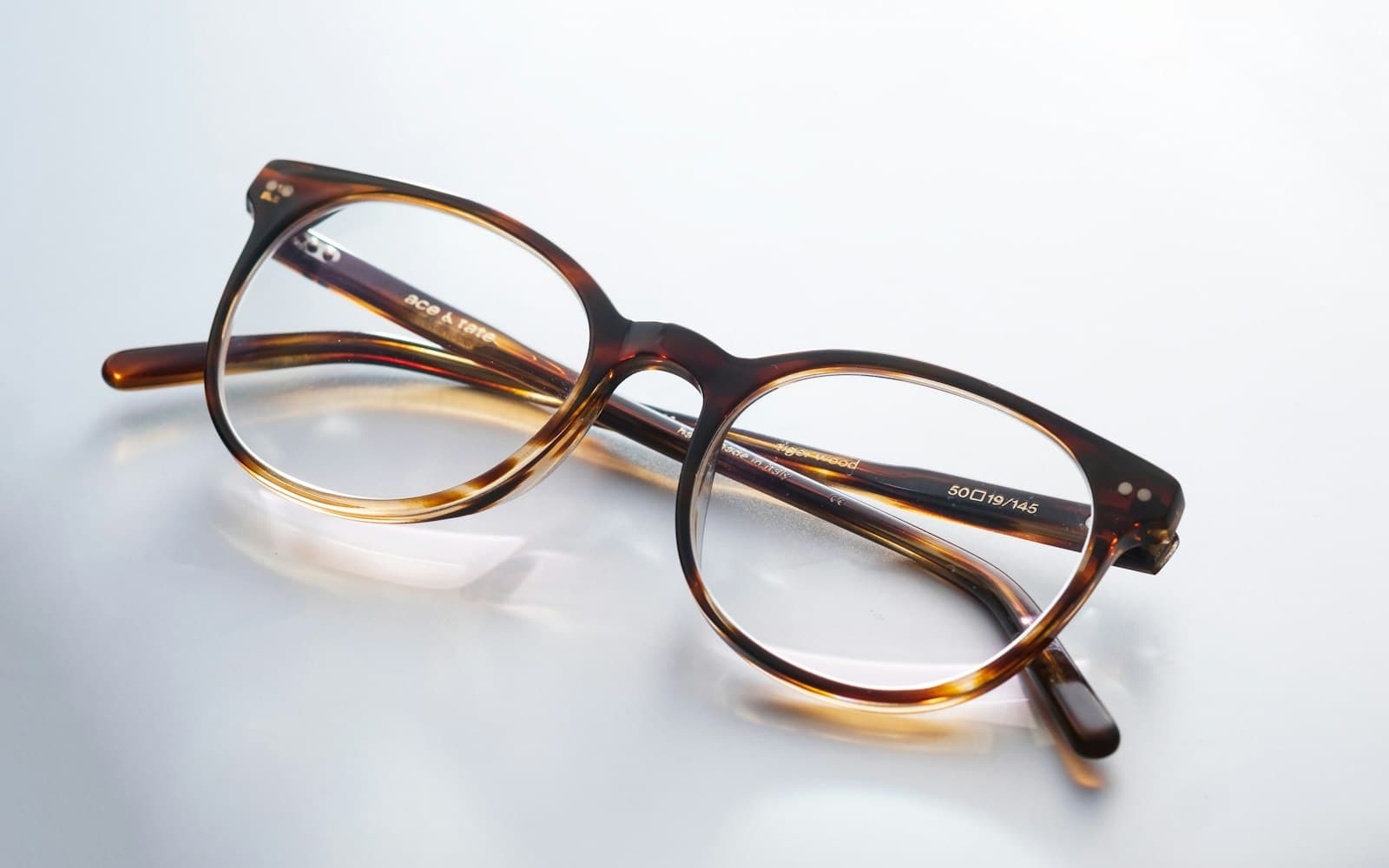
Acetate is a plant-based plastic cut from layered sheets, which is why it can have deep colours, tortoiseshell patterns and translucent “crystal” looks. It feels solid and premium.
- Pros: beautiful colours and patterns, comfortable, can be heat-adjusted by an optician, hides thick lens edges well.
- Cons: a little heavier, and can loosen in heat over time.
TR90
TR90 is a thermoplastic that’s very light and flexible. You can bend the temples noticeably and they spring back.
- Pros: one of the lightest materials, comfortable for long days, resists breaking, good for kids and sports.
- Cons: fewer colour effects than acetate, and harder to fine-tune by bending.
Injected plastic
Standard moulded plastic frames are affordable and light. They’re fine for a spare pair, but can become brittle over the years and are harder to adjust.
Stainless steel and other metals
Metal frames allow thin, minimal designs like round wire frames, aviators and browlines. Most have adjustable nose pads, which helps people with a low nose bridge.
- Pros: slim and light, adjustable fit, a professional look.
- Cons: some metal alloys contain nickel, which can irritate sensitive skin. Thin rims show thick lens edges more.
Titanium
Titanium is the premium metal: very strong, very light and resistant to sweat and corrosion. It’s also hypoallergenic, so it’s a good choice if metal frames have ever given you a rash.
- Pros: feather-light, durable, skin-friendly.
- Cons: costs more, and the thinnest titanium frames can bend if sat on.
Which material should you choose?
- High power? Acetate or a thicker full-rim frame hides lens edges best. See high-index lenses explained.
- Glasses keep slipping? A light material with adjustable nose pads helps. See glasses slipping down your nose.
- Buying for a child? Flexible TR90 with spring hinges. See our guide to glasses for kids.
- Office look? Slim metal or classic black acetate. See office glasses.
- Want rimless or half-rim? These are usually metal or titanium. Compare them in full-rim vs half-rim vs rimless.
Material matters for lens replacement too
A well-made acetate, metal or titanium frame can last many years, which makes it worth refitting with new lenses when your power changes. Viszy’s lens replacement works with frames from any brand.
Browse frames by shape: round, rectangle, square, cat-eye and aviator.
Read next: Eyewear trends 2027 · Frames for men · Frames for women
Need new lenses for your frame?
Free doorstep pickup & drop in 200+ cities. Lenses from ₹800.
Viszy
Viszy's team of lens specialists. We fit and power-check every pair we send out, and write these guides to help you choose with confidence.
Last updated 28 Nov 2026