Anti-glare vs blue-cut lenses: the difference
Anti-glare and blue-cut lenses do different jobs. Learn what each coating does, who needs which, and why most people today simply get both in one lens.
By Viszy · · 3 min read

In this article
Walk into any optical store in India and you’ll be asked the same question: anti-glare or blue-cut? It sounds like a choice between two things, but they solve different problems. Here’s what each one actually does, so you can decide without being upsold.
The short answer
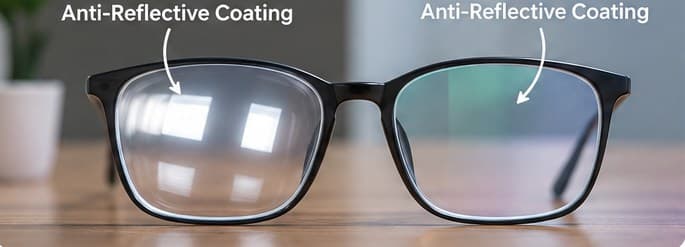
- Anti-glare (also called anti-reflective or ARC) stops light bouncing off the lens surfaces. You get clearer vision, less glare from headlights and lamps, and people can see your eyes instead of reflections.
- Blue-cut filters a portion of the blue-violet light from screens, LEDs and the sun before it reaches your eyes.
- They aren’t competitors. A blue-cut lens can (and should) also have an anti-glare coating.
What does an anti-glare coating do?
An uncoated lens reflects roughly 8 to 10 percent of the light that hits it. That reflected light shows up as white flashes on the lens, ghost images of lights at night, and the bright patches people see on your glasses in photos and video calls.
An anti-glare coating is a stack of very thin layers that cancel those reflections, so more light passes through to your eye. In daily life that means:
- Night driving and riding: less halo and starburst around oncoming headlights and street lights.
- Office lighting: fewer reflections of tube lights and windows on the back of the lens.
- Looks: your eyes are visible on Zoom, Google Meet and in selfies.
Anti-glare is the one coating almost everyone benefits from. If a lens is offered without it, that’s usually the cheapest tier for a reason.
What does a blue-cut lens do?
Blue-cut lenses contain a filter (in the lens material or a coating) that blocks part of the high-energy blue-violet light. You can often see a faint blue or purple reflection on them.
Let’s be honest about the evidence. Blue-cut lenses do filter blue light, and many people find screens a little more comfortable through them. But current research has not shown that blue light from phones and laptops damages your eyes, or that blue-cut lenses on their own prevent eye strain. Screen fatigue mostly comes from staring without blinking, poor posture and an out-of-date prescription. We explain this in detail in are blue-cut lenses worth it?
Anti-glare vs blue-cut at a glance
| Anti-glare | Blue-cut | |
|---|---|---|
| What it targets | Reflections on the lens | Part of the blue-violet light spectrum |
| Biggest benefit | Sharper vision, less night glare, better looks | Screen comfort for some people |
| Visible tint | Faint green or blue sheen | Faint blue or purple sheen |
| Who needs it | Nearly everyone | Long screen hours, if you like the feel |
| Works with power? | Yes, any power | Yes, any power or zero power |
So which should you pick?
- You drive or ride at night: anti-glare is a must.
- You’re on a laptop or phone most of the day: anti-glare plus blue-cut is a sensible, low-cost combination.
- You’re on video calls a lot: pick a lens with a premium anti-reflection coat so your lenses look almost invisible.
- Money is tight: choose anti-glare first. It makes the bigger day-to-day difference.
How Viszy handles it
You don’t have to choose. Every Viszy single vision lens, from ClearShield upwards, comes with blue-cut and anti-glare included. CrystalView adds a premium ultra-clear coat that also repels water, smudges and dust. Compare them on our lenses page, or read more about blue-cut.
Already own a frame you like? We can fit these lenses into it with free doorstep pickup and drop. See lens replacement, or browse eyeglasses if you’d like a new pair.
Read next: Are blue-cut lenses worth it? · Photochromic lenses: are they worth it? · Lens replacement price in India
Need new lenses for your frame?
Free doorstep pickup & drop in 200+ cities. Lenses from ₹800.
Viszy
Viszy's team of lens specialists. We fit and power-check every pair we send out, and write these guides to help you choose with confidence.
Last updated 8 Nov 2026