Night driving glasses: what really helps in 2027
Do yellow night driving glasses work? What actually reduces glare from headlights at night: the right power, anti-glare lenses, clean glass and an eye check.
By Viszy · · 3 min read
In this article
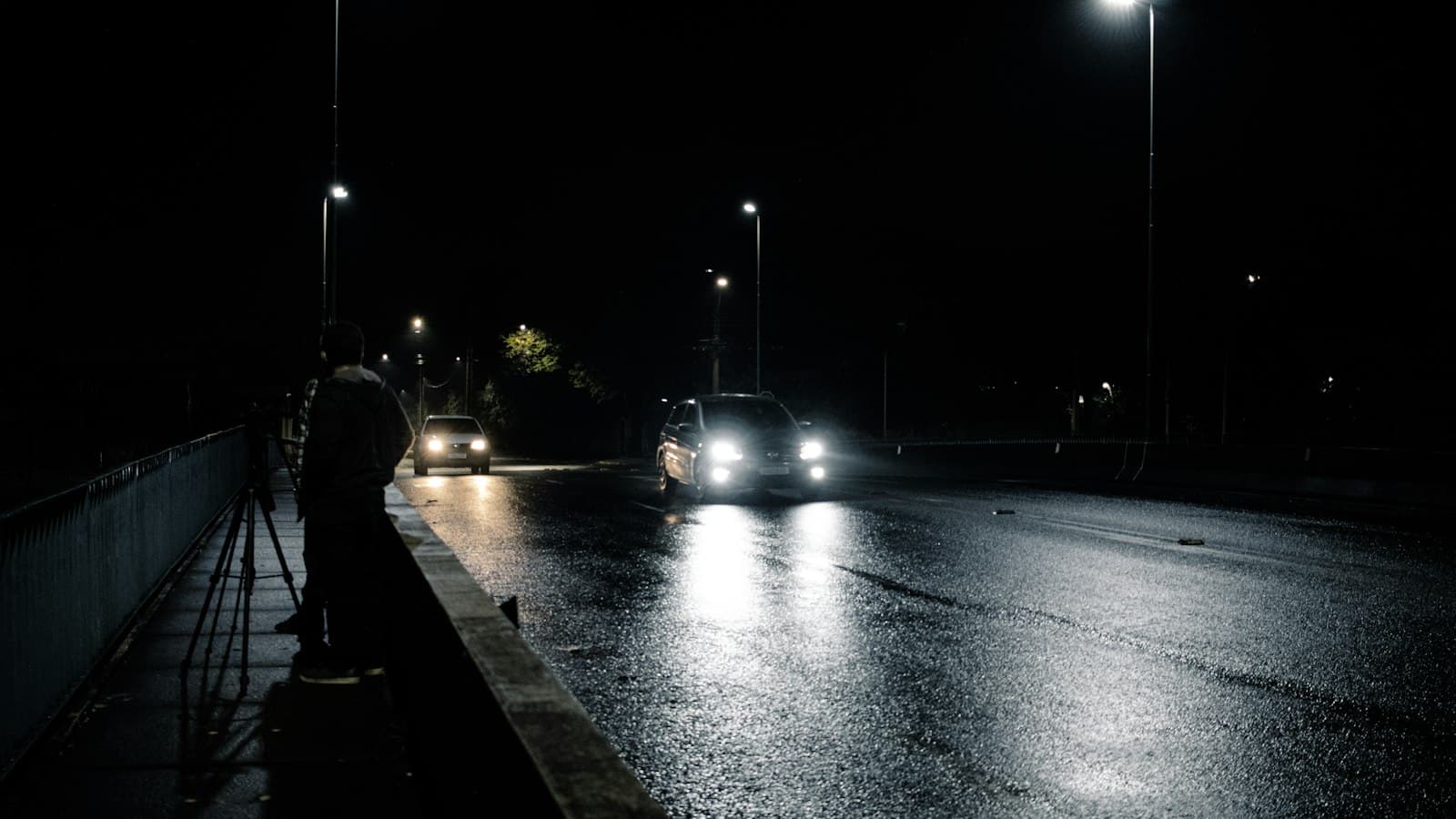
Oncoming headlights, LED high beams, wet roads and poorly lit highways: driving or riding at night in India can be tiring and stressful. Online stores are full of “night vision glasses” with yellow lenses that promise to fix it. Do they work? And what actually helps?
Do yellow “night vision” glasses work?
Yellow-tinted lenses make things look brighter and sharper to some people, so they feel helpful. But any tint lets less light reach your eyes, and at night you need all the light you can get. Studies that tested yellow night driving lenses, including a driving simulator study published in JAMA Ophthalmology, found they did not improve the ability to see pedestrians or reduce headlight glare.
Our advice: don’t wear tinted lenses for night driving, including photochromic lenses that haven’t fully cleared, and never sunglasses.
What actually helps
1. The correct, up-to-date power
Night vision is more sensitive to small errors in your prescription than day vision. Your pupils open wider in the dark, so even a small uncorrected power or astigmatism can turn lights into streaks and starbursts. If night driving has started to feel harder, an eye test is the first step. Some people only need glasses for night driving.
2. A good anti-glare coating
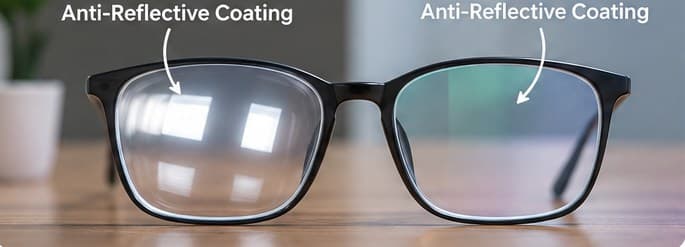
An uncoated lens reflects light off its front and back surfaces, which creates ghost images and halos around headlights. A quality anti-reflective coating lets more light through and cuts those reflections. This is the one lens feature that really makes a difference at night. Learn more in anti-glare vs blue-cut lenses. At Viszy, every single vision lens includes anti-glare, and our premium coat is the most reflection-free option.
3. Clean glasses and a clean windscreen
Smudges and scratches scatter light and make glare much worse. Clean your glasses before a night drive, and keep the windscreen clean on the inside too, where a hazy film builds up. Heavily scratched lenses? It’s time to replace them.
4. Smart driving habits
- Don’t look straight into oncoming headlights. Look slightly to the left edge of your lane.
- Dim your dashboard and phone screen.
- Make sure your own headlights are clean and correctly aimed.
- Take a break on long night drives. Tired eyes handle glare badly.
When glare is a warning sign
Sometimes increasing night glare isn’t about glasses at all. Cataracts, which are common as we get older, often show up first as glare and halos around lights at night, faded colours and frequent power changes. Dry eyes can cause it too. If glare is getting worse, see an eye doctor rather than buying tinted glasses.
Best glasses for night driving: the summary
- Clear lenses, never tinted.
- The correct, recent prescription, including any cylinder power.
- A high-quality anti-glare coating.
- Clean, scratch-free lenses.
- A frame with thin side arms that doesn’t block your side view.
Browse Viszy eyeglasses with anti-glare as standard, or keep your current frame and upgrade just the lenses.
This article is general information, not medical advice.
Read next: Anti-glare vs blue-cut lenses · Scratched spectacle lenses · Best spectacle lenses for 2027
Need new lenses for your frame?
Free doorstep pickup & drop in 200+ cities. Lenses from ₹800.
Viszy
Viszy's team of lens specialists. We fit and power-check every pair we send out, and write these guides to help you choose with confidence.
Last updated 10 Nov 2026